
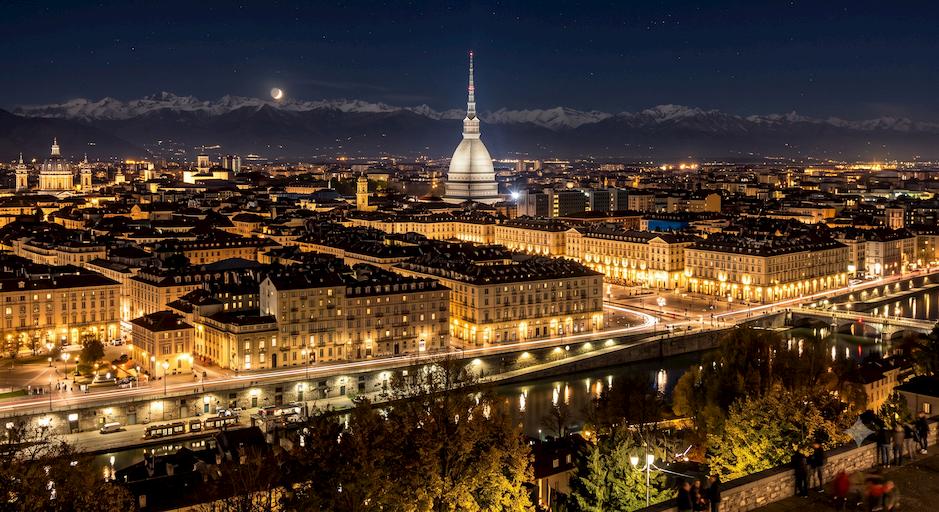
Italy has cities that perform for the world and cities that keep to themselves. Rome and Milan belong to the first group.
Turin belongs, firmly and by choice, to the second. Tucked under the Alps in the country’s north-west, it is the elegant
former royal capital that most visitors skip, and the ones who do go rarely tell you much about it. That reticence is the
whole point.
The city that invented Italian restraint
Turin was the seat of the House of Savoy and, briefly, the first capital of unified Italy. That royal past left it with grand
baroque avenues, arcaded streets and a formality you do not find further south. It is a city of appearances kept
immaculate and feelings kept private, closer in temperament to Geneva or Vienna than to Naples.
Wealth here is old and quiet. Turin built the fortunes of Italian industry, and money of that kind rarely announces itself.
The result is a city that prizes discretion as a civic value, not merely a personal preference.
Aperitivo, and the art of the unhurried evening
If any city can claim to have invented the aperitivo, it is Turin. The ritual here is not a quick drink but a slow, deliberate
transition into the evening, conducted in historic cafes under chandeliers that have not changed in a century. It sets the
tone for how the city does its nights: unhurried, refined and entirely in control of the pace.
Turin does not chase spectacle. Its pleasures are arranged rather than stumbled upon, and they reward people who
understand that the best of the city is not on display in the main piazza.
Discretion as a local dialect
In a place this private, the after-hours economy takes on the character of the city around it. Everything worthwhile
operates quietly, by reputation and introduction, with an assumption that privacy is simply how things are done.
Nothing is advertised loudly because nothing needs to be.
For a visitor, that discretion is a barrier until you know how to read it. It is why anyone looking for escort a Torino is
better served by an established, well-organised source than by wandering; in a city that keeps its secrets, curation is the
way in.
Italy’s best-kept secret
Turin will never compete with Milan for attention, and it has no interest in trying. Its appeal is precisely that it
withholds. In an Italy that increasingly plays to the camera, here is a wealthy, beautiful, deeply sophisticated city that
still prefers to keep its evenings to itself.
Those who take the time to understand it are rewarded with the version of Italy the postcards never show: quieter,
grander and far more discreet than the country’s louder cities will ever be.